


Al-Wijdan Cultural Center – Qatar
Daleel Wejdan for Educators
Designing an Educational Series to Support Values Development in Early Childhood
This project presents a model for designing a comprehensive educational series for educators and parents. It aims to support values development in children during early childhood through real-life situations that are close to the child’s world, along with interactive activities that enhance learning within everyday contexts.
This project was developed in collaboration with Al-Wijdan Cultural Center, affiliated with the Qatari Ministry of Culture, to serve as an educational tool that supports families and educators in raising children with values in a conscious and balanced way.
Project Context
Many families and educational institutions face the challenge of translating values into daily practices that children can understand and experience, especially in the early years of life, when emotional and behavioral foundations are formed.
This project is based on an understanding of the need for educational materials that:
- Speak to children in a language that reflects their daily experiences.
- Support educators and parents in their educational roles.
- Connect values to real-life situations, rather than presenting them in a direct or preachy manner.
Curriculum Approach
This educational solution model is based on an approach that views:
- Values as developed through practice and lived experience, not through rote instruction.
- Everyday moments as holding rich educational opportunities.
- The role of the educator as guiding and constructing meaning, rather than controlling or dictating.
Project Objectives
This model of educational series aims to:
- Support values development in children during early childhood.
- Empower educators and parents to engage consciously with everyday situations.
- Enhance positive educational communication between the child and the adult.
- Provide educational activities that are appropriate for children’s cognitive and emotional development.
- Support balanced upbringing that takes children’s psychological and social needs into account.
Features of the Educational Solution
This project is distinguished by several key features, including:
- Focusing on everyday life situations as an entry point for education.
- Providing educational content suited to the characteristics of children aged 4 to 6.
- Integrating activities and stories within a single framework that supports values.
- Offering direct and clear guidance for educators without complexity or overly theoretical language.
- Adaptability to different family and cultural contexts.
Curriculum Components
The series includes:
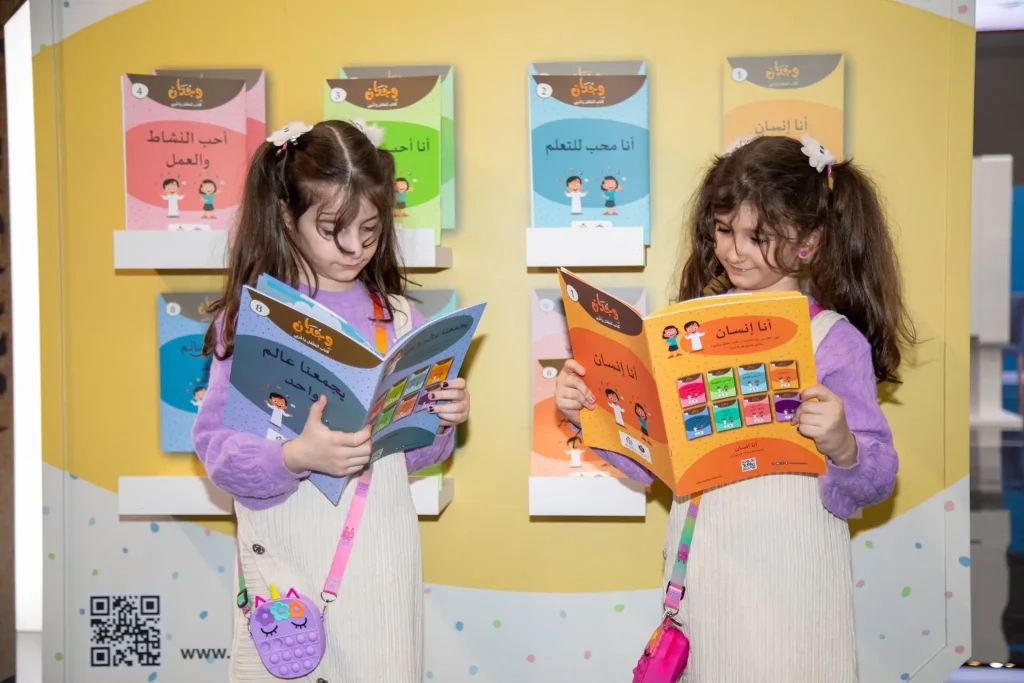
- Eight educational books designed for educators and parents.
- Practical activities for children that support learning through practice.
- Short educational stories that reflect familiar real-life situations.
- Clear guidance that helps adults apply the content in everyday life.
Target Audience
This model was designed to target:
- Children aged 4 to 6.
- Parents.
- Educators in early learning environments.
- Institutions and initiatives concerned with family education and values development.
The Value Delivered by the Project
This project presents a model of EducQuest’s solutions in:
- Designing educational tools that support families and educators.
- Translating values into practical everyday practices.
- Supporting emotional education in the early years.
- Developing educational content that can be adapted to diverse cultural contexts.
EducQuest Philosophy
Values development begins with the small details of a child’s everyday life, and the educator is the first partner in transforming these details into meaningful learning experiences.
مناهج إديكويست