


EducQuest and Samawy Educational Publishing
Science Curriculum
Designing an Educational Curriculum that Promotes Scientific Reflection and Connection to Real Life
This project presents a model for designing an interactive English-language science curriculum for Grade 4, aiming to support science learning as an experience of understanding, questioning, and exploration that helps learners build a conscious relationship with the world around them.
The curriculum is grounded in a vision that views science as a means of reflecting on creation and understanding the laws of the universe. Each lesson and activity guides learners to observe the order, precision, and beauty of natural phenomena and connect what they learn to their everyday lives, fostering deeper understanding and meaning in science learning.
Project Context
Many schools and alternative education programs seek to provide science education that combines academic quality with meaning-building, especially in Arab and Muslim community contexts outside the Arab world.
This project responds to the need for rigorous scientific content delivered in a global language, while taking into account learners’ cultural and value-based contexts without compromising educational standards or science learning objectives.
Curriculum Direction
This science curriculum model is based on an educational approach that views:
- Science learning as a process of thinking and reflection, not merely receiving information.
- Questioning and observation as essential tools for building scientific understanding.
- Connecting scientific knowledge with values as a way to build responsible scientific awareness.
Project Objectives
This educational curriculum model aims to:
- Develop learners’ questioning, observation, and inference skills.
- Support deep understanding of core scientific concepts.
- Connect science learning to learners’ everyday lives.
- Foster scientific curiosity and build positive attitudes toward learning.
- Instill authentic values such as reflection, responsibility, and gratitude.
Features of the Educational Solution
This model is distinguished by several key features, including:
- Presenting scientific content in a coherent structure that supports understanding.
- Learning activities that encourage exploration and thinking.
- Consideration of learners’ characteristics and individual differences.
- Integrating values naturally within the context of science learning.
- Adaptability to different educational contexts.
Curriculum Components
The curriculum includes:
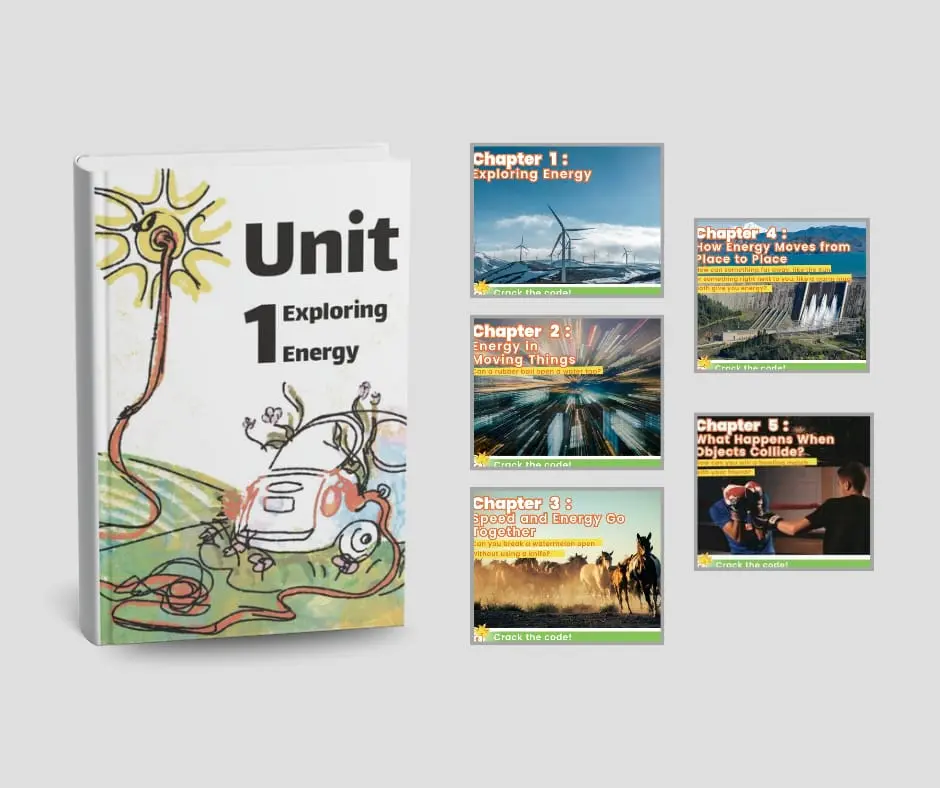
- A student book designed in a clear and engaging style.
- Exploratory and practical activities connected to real life.
Target Audience
This model was designed to suit:
- Arab and Muslim students living in the United States of America and Canada.
- Students enrolled in homeschooling programs.
- Arab and Islamic community schools.
- Educational institutions seeking science curricula that combine quality with meaning.
Value Delivered by the Project
This project presents a model of EducQuest solutions in:
- Designing science curricula based on understanding, not memorization.
- Building a positive relationship between the learner and science.
- Aligning science education with cultural and value-based contexts.
- Developing curricula that can be adapted to diverse learning environments.
Future Development
Work is currently underway on the Grade 5 curriculum within the same educational and scientific direction, ensuring continuity and integration of the learning experience across grade levels.
EducQuest Philosophy
At EducQuest, we believe that a science curriculum is not merely a book, but a window through which a child reflects on the world and discovers their place within it
مناهج إديكويست


