


Ministry of Transport – Egypt
Traffic City
Designing an interactive learning experience to promote a culture of road safety and traffic responsibility.
This project presents a model for designing a fully integrated interactive learning experience that aims to promote a culture of road safety and traffic responsibility among children and young people.
Through hands-on learning inside a miniature traffic city that simulates real-life situations, traffic concepts are transformed into conscious everyday behaviors.
The project was developed and implemented under the supervision of the General Authority for Roads and Bridges, as part of the national efforts to spread traffic awareness and build safe, sustainable behavior among future generations.
Project Context
Project Context
Challenges related to road safety highlight the need for early educational interventions that go beyond theoretical awareness and provide children with safe spaces for experience, decision-making, and understanding the impact of individual behavior on public safety.
This project is based on the belief that:
- A child is an active learner who learns through experience.
- Traffic values are acquired through practice, not memorization.
- Experiential learning is an effective tool for building sustainable behavioral awareness.
Curriculum Approach
The Traffic City experience is built around the design of learning experiences that:
- Simulate everyday road situations.
- Enable children to make decisions within a safe and guided environment.
- Integrate knowledge, behavior, and values.
- Engage both the family and the school in sustaining the educational impact.
Curriculum Components
The educational solution for Traffic City includes:
- A miniature interactive city that simulates real streets and traffic routes.
- Simulation activities and role-playing exercises that enhance learning through practice.
- Educational paper-based games that support traffic-related concepts.
- An interactive booklet designed for children to follow their learning journey.
- Supporting digital media that helps extend the impact of learning to both school and home.
Target Audience
This model was designed to target:
- Children and young people.
- Schools and educational institutions.
- Families.
- National initiatives concerned with traffic awareness.
The Value Delivered by the Project
This project presents a model of EducQuest solutions in:
- Designing experiential learning experiences with social impact.
- Transforming traffic awareness into a living educational practice.
- Integrating values and behaviors into safety programs.
- Supporting government entities with scalable educational solutions.
- Building educational models that contribute to spreading a sustainable culture of safety.
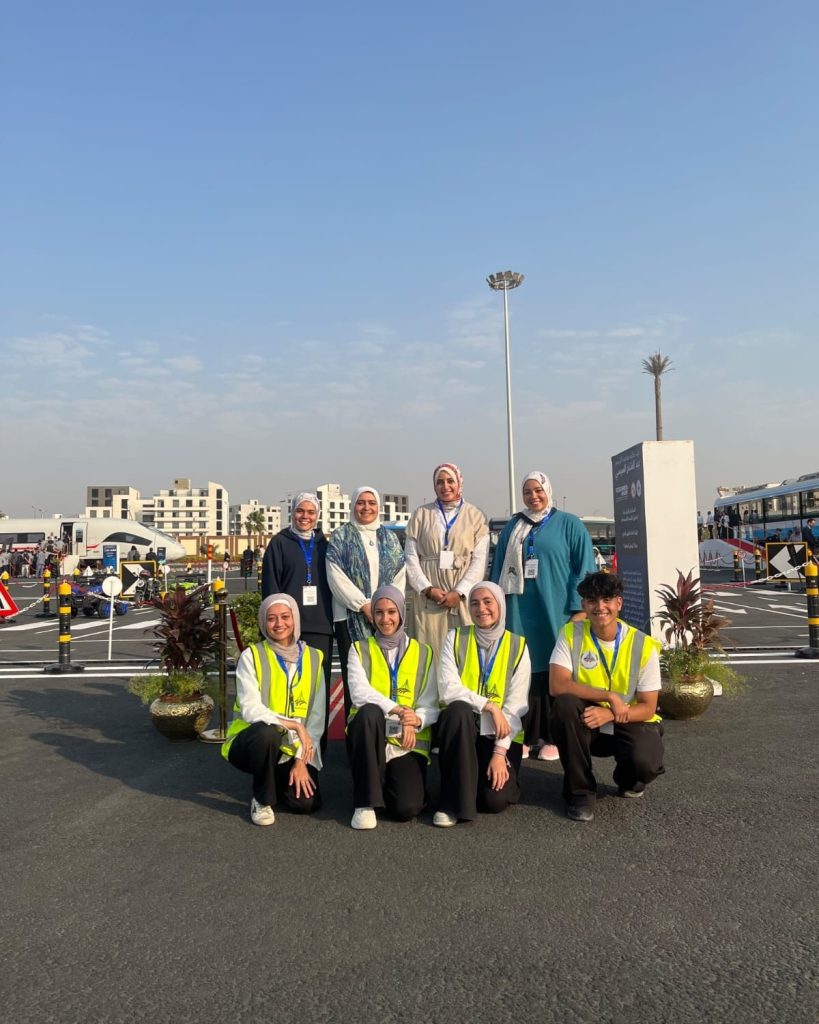
Traffic City was showcased as part of the Smart Transport Exhibition, in the presence of the Prime Minister, in a context that reflects the importance of integrating education with national initiatives to support public safety.
مناهج إديكويست


